Pages

Showing posts with label Concealed Carry. Show all posts

Sunday, January 27, 2013

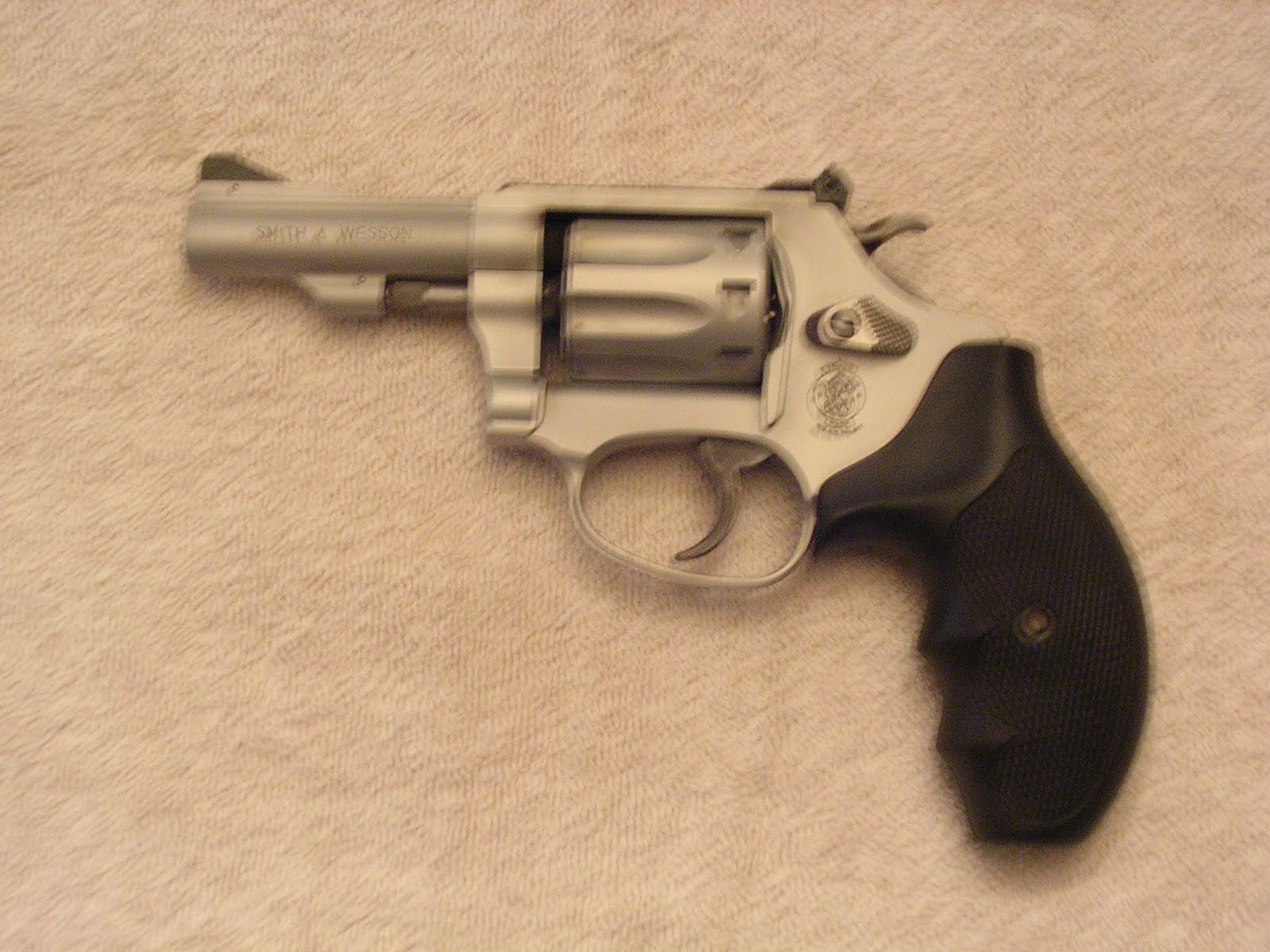
The Smith & Wesson Model 442 Remains One of the Best Options for Concealed Carry

S&W Model 442
Yesterday, my buddy "Butch" Reid, who has offered material and inspirational contributions to this blog, came visiting and he brought along his new, Smith & Wesson Model 442.  A "hammerless", double action only, +P rated revolver in .38 Special caliber with a lightweight, alloy frame, the Model 442 was introduced in 1995.  It descends from the Chief's Special (Model 36) and Centennial (Model 40), introduced in 1950 and 1952 respectively, and shares their reliable and time tested, J-frame design with its five shot capacity. 

Tuesday, June 12, 2012

Am I Carrying a Semi-automatic Pistol when I Should Be Carrying a Revolver?

Nowadays, many seem to look down upon the old double action revolver.  While they may consider it to be a good "starter handgun" for a novice because it is simple to operate, they prefer semi-automatics-- 1911s, Berettas, Glocks, SIGS-- the list could go on and on.  They like the advantages these pistols offer such as a flat profile, magazine capacity, and fast reloads; they may also prefer a certain trigger, such as that of he single action 1911.  While semi-automatic pistols can provide advantages, many who carry them would be better served carrying a revolver.

Sunday, June 10, 2012

What Caliber is Best for Concealed Carry?

The best caliber for concealed carry is determined by the size of the handgun that must be carried and the amount of recoil that the shooter can effectively control.  Special conditions and circumstances might require the use of very small handguns and/or light calibers such as the .22 Long Rifle, .25 ACP, and .32 ACP, but they are generally regarded as poor defensive cartridges due to poor penetration, small wound

Saturday, June 9, 2012

The Best "Lady's Gun"

Historically, the term "lady's gun" has been applied to rather small handguns using cartridges of relatively low power, such as the .22 Short, .22 Long Rifle, ..25 ACP, and 32 S&W Long.  Usually cute and petite, sometimes gaudy or garish, and occasionally cheap pieces of junk, traditional "ladies' guns" have not consistently demonstrated the effectiveness and reliability necessary for self defense.  Sadly, many ladies have had these types of handguns foist upon them by well meaning

Monday, June 4, 2012

What is the Best Handgun for Concealed Carry?

What is the best handgun for concealed carry?  This question is queried on the Web, asked in gun shops, posed on the range, and presented during concealed handgun classes. It seems to be a rather simple question but it produces responses that are as diverse as the needs, expertise, preferences, and financial resources of those who answer it.  This yields radically different recommendations that can include  diminutive, modestly priced, polymer framed pistols like the Kel Tec P-32 and Ruger LCP; small framed revolvers like the Smith & Wesson Chief's Special (Model 36) and Taurus Model 85 that have become concealed carry classics; pistols reflecting a police or military heritage like the Glock 19 and  various 1911s (some of which cost a king's ransom), and just about everything in between.  This leads one to wonder if there really is a "best" handgun for concealed carry and if so, what is it?

Friday, April 27, 2012

Concealed Carry Mistakes

Those who carry concealed handguns should be competent in their use.  Competence encompasses the whole spectrum of operation (safety, accuracy, drawing, holstering, reloading, and clearing malfunctions) which determines the effectiveness with which handguns are employed during deadly force encounters.  Experienced shooters and novices are often guilty of at least one of five fairly common mistakes that compromise this scope of competence, thus limiting the effectiveness of their concealed handguns.  Fortunately, these mistakes are rather simple to address.

Sunday, April 8, 2012

Concealed Carry: Are Ultra-small, Ultralight, and Ultra-concealable Handguns Worthwhile?

Since the 1990s, legal concealed carry has increased dramatically and so has the demand for ultra-small, ultralight, and ultra-concealable handguns that are more powerful than ever in comparison to their respective sizes. Many are well made, reflect current technology, and state of the art polymers and alloys are often incorporated in their manufacture. Varying as much in size, weight, caliber, as they do in price and quality, most needs, tastes, and budgets can be accommodated. This is good from the standpoint that the pistol in your pocket is far better than one that was left at home but what is traded for convenience; is it worth it?

Traditionally, the smallest handguns came in the tiniest of calibers (e.g. .22 Short, .22 Long Rifle, and .25 ACP) which did not offer much stopping power. Now, pistols practically the same size as the smallest ones of yesteryear are available for more powerful rounds like the .32 and .380 ACP. Such small packages may provide grips with little purchase, awkward controls, and miniscule sights that are difficult to acquire. Greater power generally increases recoil and muzzle blast. This combination can compromise control and accuracy which will impair critical combat functions such as follow-up shots, reloading, and jam clearing.

Larger "pocket pistols" were traditionally chambered for such cartridges as the .32 ACP, .32 S&W Long, .380 ACP, .38 S&W, and .38 Special. Now, pistols and revolvers of similar size are chambered for much more powerful rounds including the 9mm Luger, .357 Magnum, .40 S&W, and .45 ACP, which makes their milder mannered predecessors seem obsolete. With larger controls and better sights, these handguns are much easier to operate than their tiny, Lilliputian counterparts; however, significant recoil and muzzle blast, combined with short sight radii, can compromise control and accuracy that are beneficial for rapid, effective follow-up shots under combat conditions.

Back when the .357 Magnum was considered the king of combat handguns, many who could shoot a 36 ounce, medium framed .38 Special pretty well did not perform at the same level with a .357 of similar size and weight due to recoil and muzzle blast. Now, compact .357 Magnums weighing around 23 ounces are common while the S&W 340PD weighs just a mere 11.4 ounces. Many who buy these compact powerhouses shoot and carry .38 Special ammunition in them as a concession to recoil and muzzle blast, just like many police officers did years ago. Ironically, some who would recommend an 11.4 ounce .357 Magnum for self defense would say that a 41.5 ounce .44 Magnum has too much recoil for combat applications-- go figure!

Petite handguns, even in their tiniest or most powerful configurations, are not inherently inaccurate but, for most, they are more difficult to shoot well than are larger "service pistols" whose bigger grips, longer sight radii, and greater weight reduce recoil while enhancing control and accuracy. While challenges presented by ultra-small, ultralight, and ultra-concealable handguns can be overcome or accommodated with practice, many who frequently carry handguns do not necessarily shoot them very often. In such cases, the ability of the shooter(or lack thereof) may compromise the effectiveness of firearms that require greater levels of skill for successful deployment.

Diminutive handguns require the greatest degree of competence for effective operation, especially when chambered for powerful cartridges, and stopping power is meaningless when it is not effectively delivered to the target. "Expert" advice can be singular, if not misleading. What may work well for someone who shoots a thousand or more rounds per week may not suit someone who shoots fifty rounds per year. The best defensive weapon that one can choose will reflect individual skills, ability, and commitment to practice. For these reasons alone, many will find larger, heavier, and perhaps even less powerful handguns more effective for their defensive needs.

Larger and heavier is not without compromise. Suitable holsters, belts that adequately support the weight of a firearm, and perhaps a careful wardrobe selection may all be necessary to ensure that larger handguns can be carried in reasonable comfort while remaining concealed. This is not as daunting as it may seem: it was tastefully accomplished back when the Smith & Wesson Chief's Special was small, light, and powerful enough; back when concealed carry permits were rare or unheard of in many states; back before fanny packs and photographers' vests screamed "GUN!" to the otherwise clueless.

The bottom line is that ultra-small, ultralight, and ultra-concealable handguns that are more powerful than ever in consideration of their respective sizes are worthwhile for those with the skill to use them as well as the willingness to accept and adapt to the their particular nuances and limitations. For most, they represent a compromise in function and practicality. They will not work well for everyone, even if some magazine article or "expert" has proclaimed otherwise. Of course, this can be said in regard to any type of handgun; perhaps this is why there are so many designs and calibers to choose from.


Buy Gold Online


Laptops For Less: Rear Projection, DLP, LCD TV Replacement Lamps & Bulbs | Multimedia Replacement Projector Lamps | Laptop Replacement Batteries | AC Adapters and Much More!


Enjoy great home brewed beer.


accurate trading signals

Monday, July 25, 2011

The NAA Mini Revolver: Unsuitable for Defense but Far from Useless!

Long before concealed carry was a legal option in my state, I carried a North American Arms Mini Revolver in .22 Long Rifle caliber in my pants pocket. It collected a snake or two, provided a measure of comfort, and, being similar in size to a respectable folding knife, it did not "print" in most clothing. Although the NAA is a high quality, reliable revolver, the general consensus is that it is not suitable for defense and after much experience with one, I concur; however, unsuitable does not mean useless by any stretch of the imagination.

The NAA Mini Revolver, as pictured, is a five shot, single action revolver. Its solid frame, spur trigger, and bird's head grip harken to Nineteenth Century pocket revolvers, making it rather nostalgic. As a defensive weapon, it is superficially criticized for its small caliber and single action design; however, its greatest limitations are brought about by its chief advantage: its miniscule size. When held and fired traditionally in the strong hand, the tiny birds head grip and spur trigger cause the muzzle of the revolver to be substantially elevated (off of the cuff, around thirty degrees). Combined with the absence of a rear sight, this provides a tendency to shoot high, even at modest ranges. Since there is very little to hold onto, at 4.6 ounces, the muzzle rises sharply with each shot, creating substantial recovery time exacerbated by the fact that it must be manually cocked.

There is a technique to shooting these little revolvers that improves both accuracy and recovery time. Hold the revolver in the strong hand and let the trigger spur hang over the strong index finger. Them, assume a conventional, two handed stance and cock and fire it with the weak hand. By "shooting off of the top strap" (i.e. aligning the front sight with the imaginary center line of top strap and holding down so that the front sight appears split in half) useable defensive groups and fairly rapid fire can be attained. Although this technique works fine for the range, it is awkward to the point that I would not recommend it for defense.

The handling qualities of the NAA Mini Revolver make it unsuitable for defense before detriments such as small caliber, single action mechanism, and the fact that it cannot be reloaded without disassembly are considered. However, once again, unsuitable does not mean useless. Because of its especially small size, a NAA Mini Revolver can be carried unnoticed in almost any attire (including some swimming trunks if a pocket is available) and it can be easily secreted in unlikely places (e.g. small lunch boxes, document pockets of generously designed padfolios, clipboards with reasonable storage compartments, and over sun visors of vehicles, just to name a few). I have even heard of them being carried duct taped to various parts of the body and I have had mine go unnoticed or mistaken for a cigarette lighter or other novelty (by novices and trained professionals alike) when in plain sight.

Though its handling qualities make it awkward at best, its ultra concealability allows the NAA Mini Revolver to be carried unobtrusively where larger firearms might be detected, which makes it useful in liberty compromising environments that are hostile to firearms (no, it is not impervious to metal detectors, x-rays, and determined searches so do not try it). While no substitute for a more conventional defensive handgun, the NAA Mini Revolver will reliably provide five shots that should be sure at contact to arm's length distances when it is used as a "belly gun" whenever a larger firearm is unavailable (or imprudent to carry) and a knife may prove unwieldy. Thus, while regarded "unsuitable", the little NAA Mini Revolver is far from useless.


Buy Gold Online


Laptops For Less: Rear Projection, DLP, LCD TV Replacement Lamps & Bulbs | Multimedia Replacement Projector Lamps | Laptop Replacement Batteries | AC Adapters and Much More!


Enjoy great home brewed beer.


accurate trading signals